Beyond the Stratosphere: IWC's Venturer Vertical Drive is a Tool Watch for the Final Frontier
In the world of horology, we often talk about "tool watches"—timepieces built for a specific, demanding purpose. We celebrate the dive watches that plumb the ocean depths and the pilot's chronographs that navigate the skies. But IWC Schaffhausen, with its new Pilot's Watch Venturer Vertical Drive (Ref. IW328601), has just launched the concept into an entirely new orbit. This isn't just a watch inspired by space; it's a mechanical instrument engineered from the ground up and officially certified for human spaceflight. Forget everything you thought you knew about astronaut watches; this is a paradigm shift.
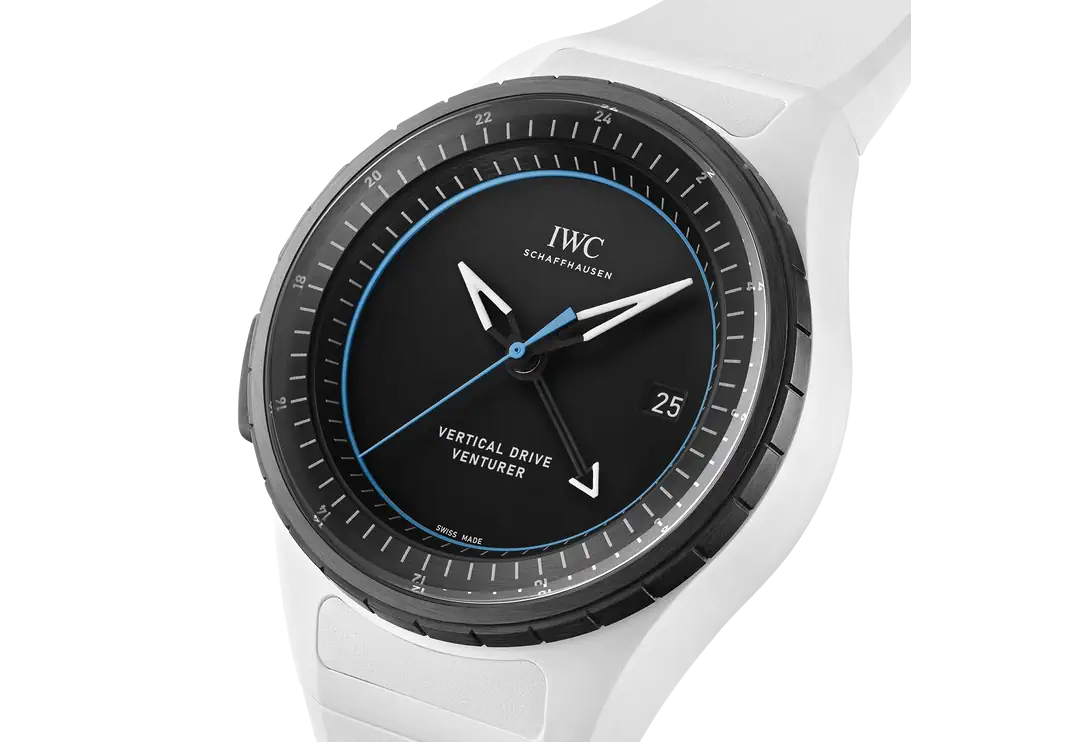
Developed by IWC's boundary-pushing XPL division, this timepiece was created in partnership with Vast, a company building the world's first commercial space station, Haven-1. The Venturer Vertical Drive has been rigorously tested and qualified by Vast for missions aboard Haven-1, making it a piece of certified space hardware you can wear on your wrist. Let's break down what makes this watch so extraordinary.
A Crownless Revolution in Usability
The most radical and immediately obvious innovation is the complete absence of a traditional crown. Think about it: operating a small, fiddly crown while wearing the bulky, pressurized gloves of an EVA (Extravehicular Activity) suit is a non-starter. IWC's XPL engineers devised a brilliant and intuitive solution: a patent-pending rotating bezel system they call "Vertical Drive."
"Inspired by astronauts wearing space suits with gloves, all functions of the watch can be controlled through an innovative, patent-pending rotating bezel system, eliminating the need for a crown."
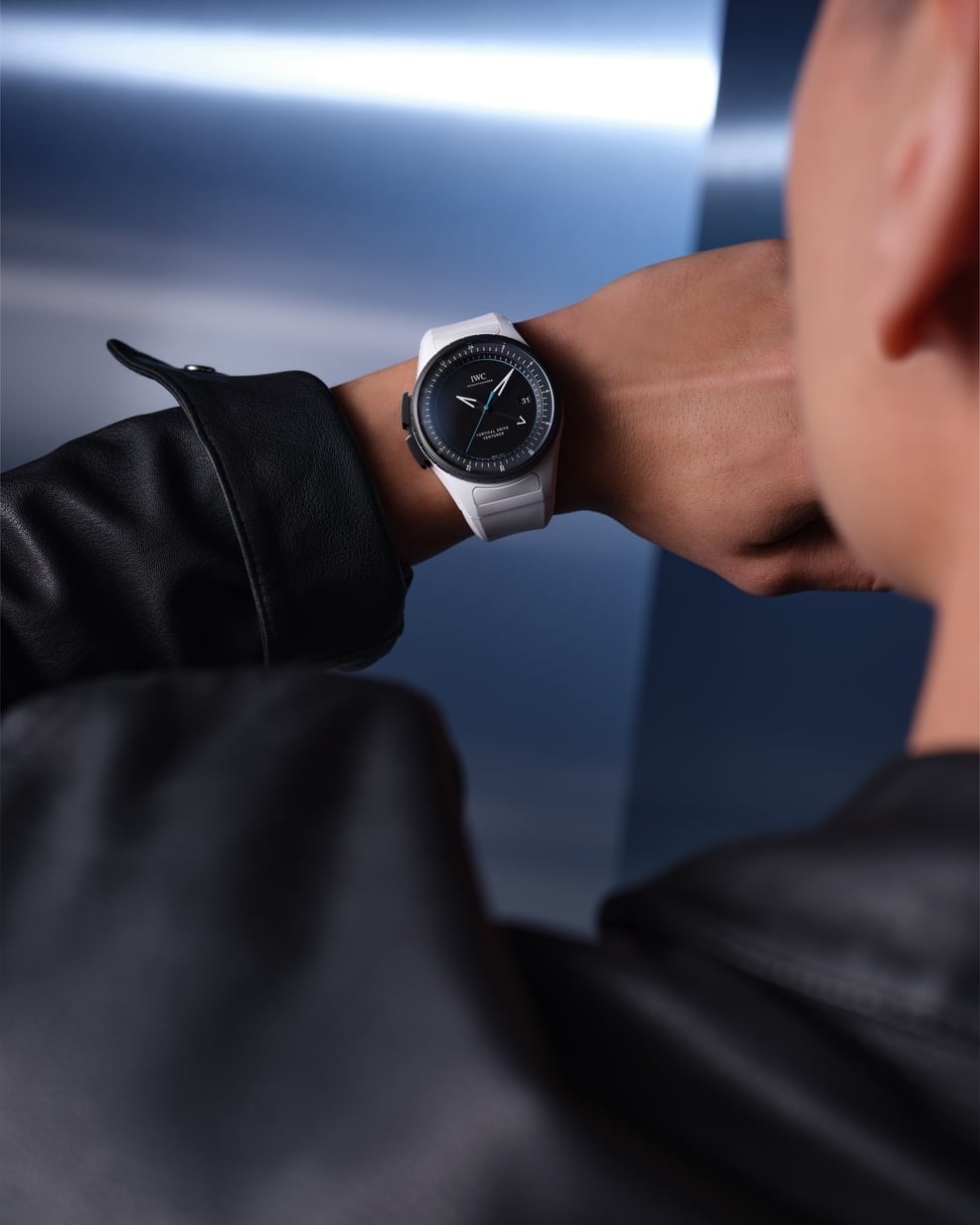
Here’s how it works: a prominent rocker switch on the left side of the case allows the astronaut to select a function—winding, setting mission time, or adjusting the local hour hand. Once selected, the bidirectional bezel is used to make the adjustment. An internal clutch system efficiently transmits the bezel's rotation to the movement's stem. It’s an elegant, robust, and incredibly practical solution to a problem that has existed since the dawn of the space age.
Engineered for the Void: Materials and Movement
A watch designed for spacewalks must withstand the most extreme environmental conditions imaginable. Temperatures in orbit can swing wildly from over 100°C (212°F) in direct sunlight to -150°C (-238°F) in shadow. To combat this, the Venturer is built from a suite of advanced materials.
Materials Science in a 44.3mm Package
- Zirconium Oxide Ceramic: The main case is crafted from a stark white zirconium oxide ceramic. Second only to diamond in hardness, this material is exceptionally scratch-resistant. Its white color was chosen to reflect intense solar radiation, minimizing heat absorption.
- Ceratanium®: The rotating bezel, case back, and even the pin buckle are made from IWC's proprietary Ceratanium®. This groundbreaking material starts as a special titanium alloy and is fired in a kiln, causing the surface to transform and take on ceramic-like properties. The result is a material that is lightweight and robust like titanium, yet hard and scratch-resistant like ceramic.
- FKM Rubber Strap: An integrated white FKM rubber strap provides excellent thermal insulation and resistance to UV radiation, crucial for withstanding the harsh environment of space.
The Heart of the Mission: Calibre 32722
Powering this cosmic tool is the newly developed IWC-manufactured Calibre 32722. This isn't just a standard movement dropped into a high-tech case; it was co-designed with the Vertical Drive system. The automatic movement boasts a hefty 120-hour power reserve, a practical necessity for long-duration missions.
Crucially, it features a hybrid winding system. On Earth, the Pellaton winding system's oscillating mass will do the job. In microgravity, where a traditional rotor is less effective, the movement can be manually wound by turning the bezel. The dial is designed for absolute clarity, with a 24-hour scale for mission time (UTC/GMT), a necessity when orbiting the Earth every 90 minutes and experiencing 16 sunrises and sunsets a day. An independently adjustable hour hand allows for the tracking of a second time zone, like home time.
A Final Thought: A True Instrument for a New Age
For decades, the title of "astronaut watch" has been dominated by a single, iconic chronograph that was, ironically, first designed for motorsport. While its legacy is undeniable, it was a watch adapted for space. The IWC Pilot's Watch Venturer Vertical Drive is something else entirely. It is one of the very first mechanical timepieces designed from a blank slate, with every component and function conceived specifically for the unique challenges of human spaceflight in the 21st century. It represents a monumental feat of engineering that takes the concept of the tool watch and launches it, quite literally, into the stars. This isn't just a new watch; it's a new benchmark.